
The Dale County Multi-Day Arrest Log
Dale County does not run a confirmed multi-day blotter. No countywide page spells out a rolling 72-hour, seven-day, or monthly window. That leaves the Dale County Sheriff's Office as the place to start, even though its app does not say how far back inmate results reach.
A real blotter tells you two things up front. It names the span it covers, and it says whether the list is countywide or limited to one agency. Dale County has not published that kind of page. Until it does, a multi-day arrest log for the county has to be built by hand: contact the jail for current custody, request the booking record, then follow the court file as it develops.
Read Dale County Arrest Reports
Begin with the date you actually know. Then work outward from there. A news story's publication date or a search-engine timestamp can look authoritative, but neither one is the booking date the jail recorded. Keeping those dates apart saves a lot of confusion when you trace a Dale County arrest across several days.
- Check the official sheriff site and app for a current inmate-information link, then record the source and any visible update time.
- Write down the booking date and time, arresting agency, booking number, and charge label exactly as the official source states them.
- If no row appears, call the Dale County Jail at (334) 774-5402 to ask about present county custody.
- For a prior booking, contact the Sheriff's Office at (334) 774-2335 and ask how to request the jail log, booking record, release information, and photo if releasable.
- Use the Dale Circuit Clerk record for later case actions and disposition. Do not treat the booking charge as the final result.
Was the arrest today? The Dale County 24 Hour Arrests guide covers that quick first-day check. This page goes further back. It follows a booking record past the first 24 hours and into the days and weeks after.
Dale County Arrest-Log Fields
Alabama jail records, as described in state sources, carry four kinds of information. There are identifying details, the charge, commitment facts, and release information. Older Dale roster examples suggest which fields are worth requesting from the county. They do not prove that a current public blotter puts all of those fields online, so treat them as a request checklist rather than a published list.
| Field | What it establishes |
|---|---|
| Name and physical description | Identifies the booked person; confirm details when names are alike. |
| Booking number | Connects a request to one intake event rather than every record for a name. |
| Booking date and time | Marks jail intake, not necessarily arrest time or the day a news story appeared. |
| Arresting agency | Shows which county, city, state, or other agency made or reported the arrest. |
| Charge as booked | States an charge at intake and may not match the later filed or resolved charge. |
| Bond and release information | May explain a change in custody; confirm current status with the jail. |
| Booking photograph | May be held as a separate electronic file. Public web display and release are not guaranteed. |
Note: Ask for the precise record type because a roster row, booking file, jail log, and court docket answer different questions.
Dale County Weekend Posting Gaps
The county has no posted rule for weekend or holiday roster updates. Claims of a Monday batch or a guaranteed daily refresh would be guesswork. So when several reports surface at once, check each arrest date, booking time, and publication date on its own terms. They may not describe one day of activity at all.
Weekend bookings create a special wrinkle. A person booked Saturday can walk out before anyone checks a current-custody view on Monday, yet the booking record still stands. A Monday news story, meanwhile, may describe an arrest from days earlier. Call the jail for who is in custody now, and use a records request for the older intake. The countywide Dale County recent-arrests resource lays out the full booking-record and photo path.
Dale County Arrest Archives
How long does Dale County keep booking photos and jail logs? There is no confirmed county-specific figure. Here is the key point, though. When a record vanishes online, that does not mean the government destroyed it. And when a commercial archive still shows a page, that does not mean anyone is still in custody. Retention minimums for local governments come from the Alabama Department of Archives and History through its records disposition authorities.
The ADAH local-government records page has a local RDA search that lists schedules for law enforcement. Series worth knowing include incident and offense reports, investigation files, arrest case files and indices, jail or prisoner records, and photographs. Those schedules frame a request, but only the Dale custodian can say where a specific record sits.
For an older booking, come prepared. Give the full name, the approximate date, the likely agency, and the exact item you want. Ask whether the file is still with the Sheriff's Office, moved under an RDA, or reachable some other way. Court files run on Judicial System schedules, so a disposition may still sit with the Dale Circuit Clerk long after an online booking row disappears.
The Alabama Records Center can hold records an agency has transferred. Even so, it is not a public lookup desk. Start with the Dale County custodian instead, and ask three things: the governing record series, whether the material is on site or transferred, and the correct public-reference route. That chain beats guessing from a search result that a file is gone.
Note: Keep custody status, record-retention status, and online publication status separate; one cannot reliably prove either of the other two.
Local News Is Not Dale's Blotter
Local news fills gaps in the multi-day trail, but it is not a blotter. WTVY's Dale County section covers arrests, investigations, and court follow-up through the week. The Dale County Chronicle runs crime and arrests sections built around individual reports. Southern Star/Ozark News offers weekly and digital archive material, while the Southeast Sun and Daleville Sun-Courier track the Daleville area.
Remember what news is. Outlets pick stories for news value, so they never list every Dale County booking. A photo in an article is not proof the jail runs a public mugshot gallery. Stories lean on police releases, sheriff statements, court filings, interviews, or booking records, so check the named source. Then verify the booking and the final court outcome through the right government office.
The Southern Star/Ozark News archive makes a useful example. Its front page shows the archive layout plainly. It is a story archive, though, not an official custody list for Dale County.

A dated news story can point you toward a lead. It cannot do the job of a blotter. For booking facts and what a court later decided, the Dale County jail and the clerk's office hold the actual records.
When a Dale Arrest Entry Disappears
Older names seem to drop off the Dale County roster while the newest arrests stay up. No official removal window is published anywhere. A name that vanishes could mean release, a transfer, a short display period, or a protected record. Treat it as a reason to ask the custodian directly. Never assume the arrest never happened.
Commercial booking sites keep dated reports alive for weeks or months, but each site controls its own archive depth. Their pages can also linger after custody or charges change, so none of them stands in for the sheriff, the custodian, or the court. For the rules on how long a record series must be kept, start with the official ADAH local RDA search.
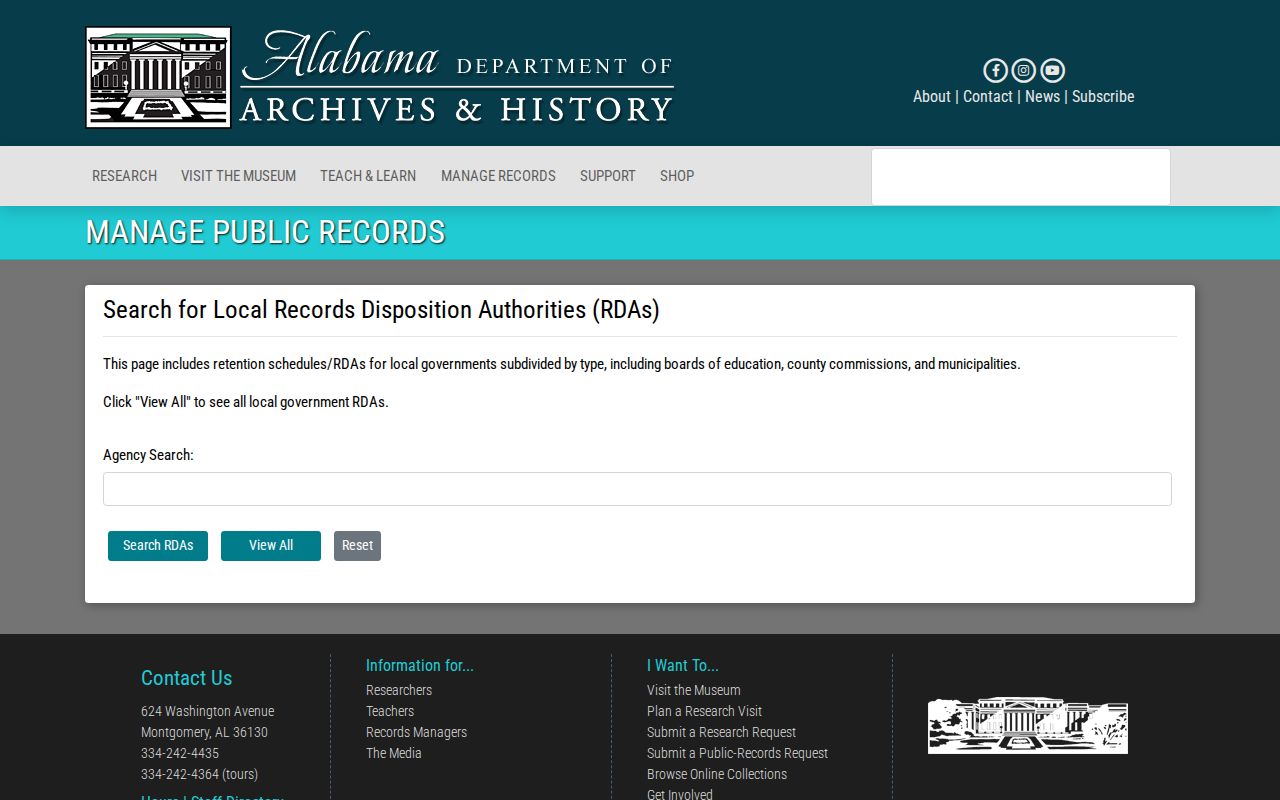
That schedule search frames a historical request nicely. It will not show Dale County arrest records itself, though. The actual files sit with the sheriff and the clerk.
Five Dates in a Dale Arrest Trail
Five separate dates shape any Dale County arrest trail, and each one answers a different question. The arrest date tells you when officers acted. The booking date shows when the person entered the jail. Then comes the publication date, which only marks when a web page or news story went up. Release and disposition dates follow, tracking the custody change and the court's later handling of the case.
Search results rarely line up neatly. An article published this month may describe an arrest from years back, and a stale booking page can linger online after a person has long since been released. Jot each date next to its source and what it measures. That habit alone keeps the Dale County arrest log from getting confused with a live jail roster or a finished court record.
Know what each source is for, too. A sheriff or jail record documents intake and custody. Police releases state what the investigating agency reported, while a newspaper picks whichever slice of the story it chooses to print. The Circuit Clerk holds the court trail, including any later action. When dates or charge labels clash, request the underlying record rather than forcing everything onto one timeline.
Public Record Search
Sponsored Results